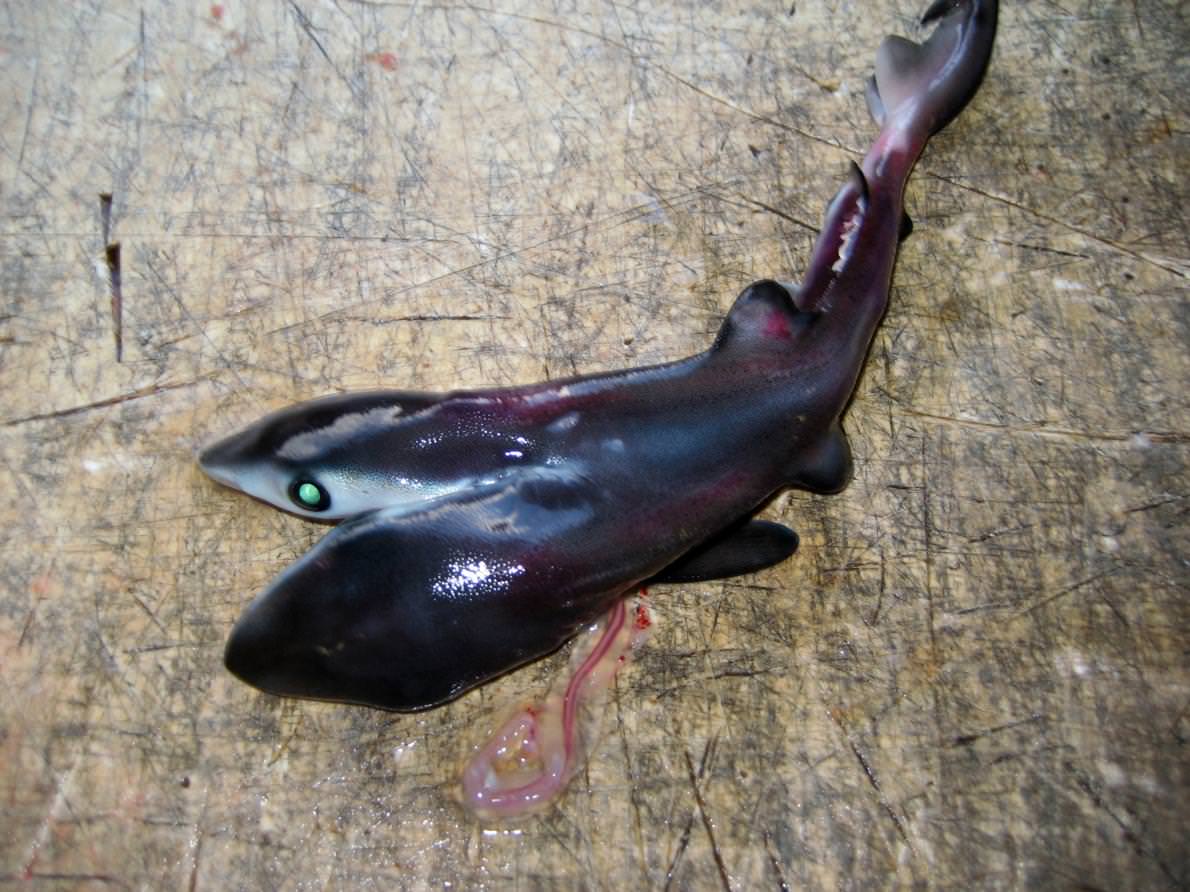

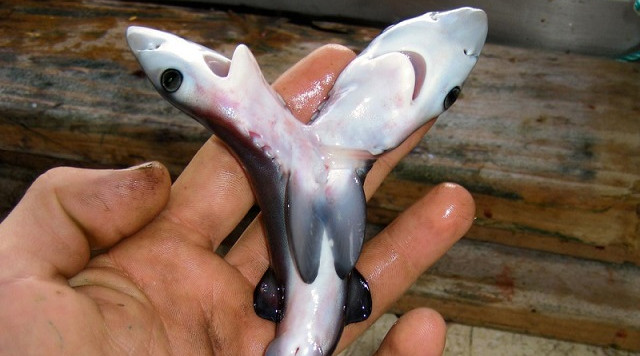
Two-headed sharks do exist? While this might seem like something that happens in weird sci-fi films or scary movies, it is slowly becoming more of a reality.
Spanish researchers have recently found in a an embryo of an Atlantic sawtail catshark with two heads and have reported the finding in a new study. This comes as this mutation is becoming more and more common.
And scientists have yet to pin down a specific reason behind the mutation. However, there seem to be a number of theories developing.
(Valentín) Sans-Coma and colleagues say a genetic disorder seems to be the most plausible cause for the two-headed catshark, since the embryos were grown in a lab among nearly 800 specimens. To the best of their knowledge, the eggs were not exposed to any infections, chemicals, or radiation.
But wild sharks’ malformations could come from a variety of factors, including viral infections, metabolic disorders, pollution, or a dwindling gene pool due to overfishing, which leads to inbreeding, and thus genetic abnormalities. (See “New Diseases, Toxins Harming Marine Life.”)
Aside from these reasons, one scientist believes this is the product of overfishing. With more of these sharks being caught, the gene pool is shrinking and making this possibility more likely.
For those wanting to see a full-size, two-headed shark, you might have to wait. As scientists point out, these two-headed sharks often don’t live much past birth.
But I’m sure that hasn’t stopped the folks involved in Sharknado from taking note and finding a way to incorporate it in the franchise’s next Sci-fi feature.
Photos